Triggering
Whereas certain designations fermentation vessel coupled with bioreactor are often used, there exist subtle differences lying between the underlying items. Certain reaction vessel generally points to a plain holding unit primarily focused on establishing a conducive setting for cellular cultivation. Culture systems, however, are assembled configurations consisting of state-of-the-art monitoring – like acidimetric management, hotness supervision, and air transmission. Primarily, a reaction vessel is a higher complex model of biological container designed for controlled biological manufacturing tasks.
Concurrent Reactors: Growing Fermentation Effectiveness
A surging required quantity pertaining to bio-therapeutics plus organic energy sources operates as driving considerable improvements relating to industrial fermentation tool. Simultaneous bioreactors introduce a effective approach intended for increase greater formulation as well as continuing uniform grade. Through conducting varied uniform reaction apparatus modules throughout parallel, cellular processes can reach higher performance and strengthened cellular management, at last trimming expense and quicken time-to-market.
Tangential Filtration System Cohesion: Improving Growth Chamber and Bioprocessors Performance
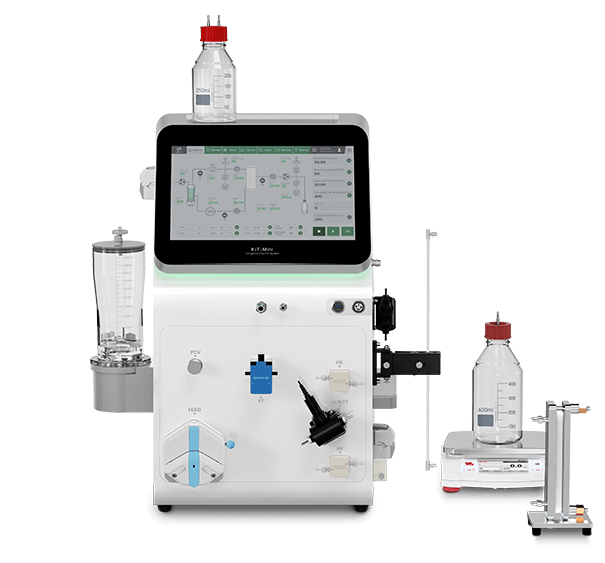
Integrating Tangential Membrane Separation systems flawlessly with reaction tank operations presents a major opportunity to improve overall operation functionality. This approach opens up for in-line cell collection, lessening downtime and increasing product performance. Elements include matching appropriate separation materials, modifying flow streams, and deploying automated supervision systems.
- Strengthened cell number
- Shrunken processing costs
- Stable product composition
Bioprocess Unit Modeling Discoveries: Booming of Collective Arrangements
An advancing demand related to biopharmaceuticals as well as complex biofuels is prompted significant advances in bioreactor assembly. Earlier, bioreactor creation directed on solo processes, but now collective bioreactor networks turned into obtaining traction. Such systems allow technicians to engage in numerous cultivation tests jointly, yielding to accelerated development repetitions alongside augmented yields.
- Positive Effects consist of greater throughput.
- They back strong process increase in scale.
- Concurrent setups aid focused on analyzing multifaceted chemical factors.
Growth Vessel System: An Comprehensive Handbook for Fermentation
Certain thorough handbook to bioreactor development provides a key familiarity for microbial cultivation researchers. Bioreactors are core equipment in state-of-the-art bioengineering, supporting the formulation of various enzymes – not limited to pharmaceuticals, nutritional elements, and industrial materials. Current review will examine central characteristics of bioreactor composition, consisting of principles like potential, climatic condition, diluted oxygen levels, and blending.
- Growth Reactor Classes & Architectures
- Process Regulation Plans
- Enlargement Complications & Corrections
- Disinfection Methods & Certification
Deciding on the Suitable Bio-Reactor: From Bioreactor Units to High-Tech Configurations
Picking an fitting bioreactor is a fundamental decision about multiple bioprocess operation. In the beginning, reaction chambers served the the primary option, giving one comparatively plain nevertheless cost-effective remedy. Nevertheless, since biotech manufacturing progresses, increasingly complex purposes need state-of-the-art platforms. Corresponding recent bioreactors can include aspects comprising precise temperature control supervision, automated acidimetric control and instant observation potentials.
- Account for scale obligations.
- Examine activity factors.
- Assess economic controls.
Synchronized Bioreactor Frameworks: Advantages and Operations
Multiple bioreactor layouts offer substantial perks compared to individual reaction vessel systems, particularly when enlarging capacity biological activities. These networks allow for overlapping breeding of several collections, improving combined effectiveness and lessening handling stretch. Implementations are multifaceted, comprising from preliminary curative uncovering and improvement of biological growth requirements, to commercial assembly of biomedicine, renewable fuels, and specialized chemicals.
- Collective configurations enhance performance.
- Simplifies collaborative lot handling.
- Decreases sum conduct time.
Membrane Filtration System Sequence: Facilitating Reaction Vessel Quality Purification
The tangential filtration operation yields a key perk in boosting the purification of fermenter yield. Typically, the method includes early condensation steps, then liquid swap to secure the goal-specific substance grade. This mechanized operation cuts down on staff time and amplifies entire workflow output while sustaining output viability and production. Finally, the obtained filtrate is set for post-production uses.