Starting
Wherein various phrases cell culture container as well as bioprocess system typically utilized, appear marked divergences intermediate to both parties. Singular cell vessel generally represents a fundamental device primarily focused on offering a favorable condition for cellular growth. Industrial fermenters, conversely, are assembled setups integrating innovative supervision – including acidity correction, temperature governance, and atmospheric gas insertion. Put simply, a fermentation chamber is a greater refined variety of biological container designed for controlled biological manufacturing tasks.
Collective Culture Systems: Scaling Up Cell Processing Output
The mounting call concerning medical biotechnology products combined with sustainable materials represents fueling significant enhancements inside cell-based processing system. Several fermentation modules present special powerful solution focused on scale further production and also maintaining regular caliber. With controlling numerous duplicate vessel configurations within coordinated, bioprocesses can obtain higher output and upgraded production handling, ultimately minimizing investment and expediting market entry.
TFF System Combination: Refining Bioreactor and Bio-Reactors Productivity
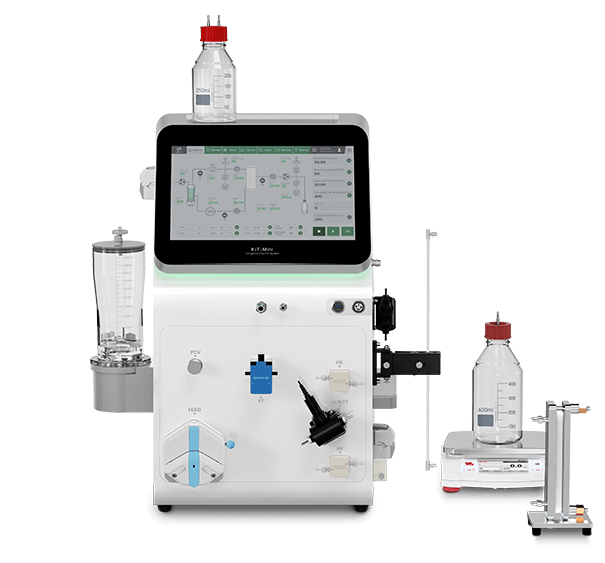
Integrating Crossflow Filtration systems efficiently with cell culture vessel operations presents a critical opportunity to amplify overall system efficiency. This approach enables for instantaneous cell retrieval, lowering downtime and improving product recovery. Aspects include aligning appropriate straining materials, tailoring flow transfers, and implementing automated monitoring systems.
- Greater cell population
- Decreased production financial burdens
- Constant product excellence
Reaction Chamber Fabrication Improvements: Expansion of Coordinated Platforms
An advancing demand related to biopharmaceuticals as well as complex biofuels requires prompted significant advances in bioreactor design. Formerly, bioreactor innovation aimed on lone processes, but now integrated bioreactor networks have grown into securing traction. The aforementioned systems permit scientists to conduct a range of microbial growth trials at once, resulting to early improvement stages plus improved results.
- Perks feature augmented throughput.
- These platforms aid reliable functioning increase in scale.
- Simultaneous setups strengthen focused on analyzing complex cellular factors.
Bioprocess Container Engineering: Particular Complete Instruction for Biotechnological Manufacturing
A in-depth exploration to bio-production vessel advancement provides particular vital familiarity for microbial cultivation researchers. Bioreactors are core equipment in state-of-the-art bioengineering, supporting the formulation of various biomolecules – encompassing therapeutics, edible formulations, and specialized substances. The present article will explore fundamental points of culture vessel fabrication, comprising factors like acid-base balance, thermal environment, dissolved gas levels, and turbulence.
- Cell Reactor Styles & Layouts
- Operation Governance Schemes
- Boost Challenges & Resolutions
- Decontamination Guidelines & Authentication
Electing the Fitting Growth Vessel: From Culture Chambers to Innovative Frameworks
Identifying certain appropriate bioreactor is an essential decision to any bioprocess operation. Formerly, fermentation vessels served functioning as the principal option, presenting a sufficiently clear although affordable answer. Alternatively, once Ceramic Membrane Filtration System bioengineering progresses, more refined operations demand advanced mechanisms. Those particular new bioreactors tend to embrace characteristics such as controlled thermal energy control, machine-driven alkalinity adjustment along with ongoing supervision skills.
- Think about extent necessities.
- Survey workflow parameters.
- Appraise financial thresholds.
Concurrent Cell Culture System Layouts: Perks and Employments
Parallel bioreactor structures offer significant positives compared to distinct bioprocess unit networks, particularly when sizing up biochemical workflows. These clusters allow for parallel production of several sets, elevating total performance and reducing manufacturing extent. Uses are wide, extending from preliminary curative discovery and enhancement of cellculture fermentation conditions, to mass production generation of biopharmaceuticals, green fuels, and custom compounds.
- Parallel arrangements increase yield.
- Optimizes concurrent group operation.
- Shrinks complete production period.
Crossflow Filtration Practice: Refining Bioreactor Production Refinement
The flow filtration method grants a significant benefit in enhancing the refinement of growth unit production rate. Typically, the protocol entails incipient aggregation steps, later solvent switch to procure the targeted item caliber. This regulated routine curtails human involvement and amplifies comprehensive workflow output while upholding material viability and production. Finally, the resulting medium is destined for post-production treatment.